Signed in as:
filler@godaddy.com
Signed in as:
filler@godaddy.com

To effectively design public transit routes and schedules, we start with a current state analysis. Using data analysis, public feedback, and industry best practices, LTRT create optimized routes and schedules that meet community and agency need.
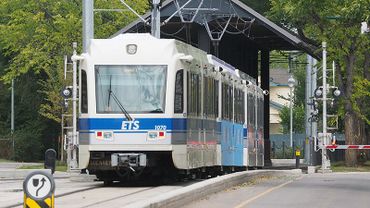
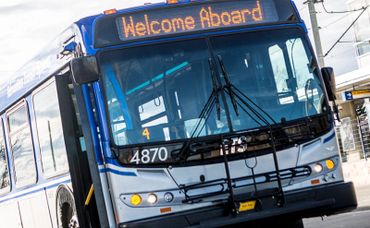
LTRT WAS engaged to support the development of the regional amalgamation of 8 transit agencies in the Edmonton metropolitan area, including the cities of St. Albert, Spruce Grove, Leduc, Fort Saskatchewan, Beaumont, and Edmonton, and the towns of Stony Plain and Devon.
Our key areas of work include developing detailed transit service planning that includes assessing the opening day network functionality, coordinating service delivery agreements, optimizing service, integrating service with current local systems, scheduling, scheduling software procurement, municipal member engagement, financial costing, and developing the final service plan.
Leveraging Optibus transit scheduling software, LTRT provided the EMTSC and member municipalities with a detailed analysis of costs for service delivery based on the original business case and requests from the member municipalities, and comparing them against the current state of service.
This analysis went through several iterations in rapid succession, facilitated through the technology and frequent meetings with individual municipalities to discuss options for maximizing service quality for their residents while ensuring that costs remain within expectations.
Client: Edmonton Metropolitan Transit Services
Project: Detailed Regional Transit Service Planning & Bottom-Up Costing
Location: Edmonton Metropolitan area
When: 2022
Report:


LTRT was retained by the Municipality of Chatham-Kent to improve service coverage and network efficiency within the Chatham urban area. In the Chatham Transit Network Optimization Report, LTRT presented the Municipality with three alternative network scenarios, each with its own proposed service frequency, stop locations, and flex-route opportunities.
Concurrently, LTRT prepared a report on the placement of additional demand-responsive stops in urban centres outside of Chatham to enhance the service coverage in those communities.
Client: The Corporation of the Municipality of Chatham-Kent
Project: Chatham-Kent Transit Optimization
Location: Chatham-Kent, Ontario
When: 2020
Report:


The Jefferson Transit Authority (JTA) retained Left Turn Right Turn to undertake a Comprehensive Transit Operational Analysis. Operating in Jefferson County, WA the JTA offers a variety of public transportation services to meet the needs of their citizens. This includes fixed-route, route deviated, paratransit and rideshare, with both regional and intercity bus connections.
The goals of this project were to provide the JTA with a scalable service model that can adjust size based on funding as well as increasing public satisfaction. To these ends LTRT conducted a thorough background analysis to understand the current and potential market demand for transit and identify routes and areas where transit is over and underperforming.
To understand the communities' needs, LTRT planned a week-long sprint that included discovery sessions and preliminary public engagement to identify the communities’ priorities and to review possible restructuring alternatives. We collected data through onboard system wide ride checks, analysis of key performance indicators, and reviewing current financial practices to find cost efficiencies and propose alternatives or modifications.
This work culminated in the development of a Comprehensive Analysis and Service Recommendations report with a priority list of potential improvements including estimated operating and capital costs.
Client: Jefferson Transit Authority
Project: Comprehensive Transit Operational Analysis
Location: Jefferson County, Washington
When: 2024 - 25
This website uses cookies. By continuing to use this site, you accept our use of cookies.